
A Rover That Was Always Almost Done
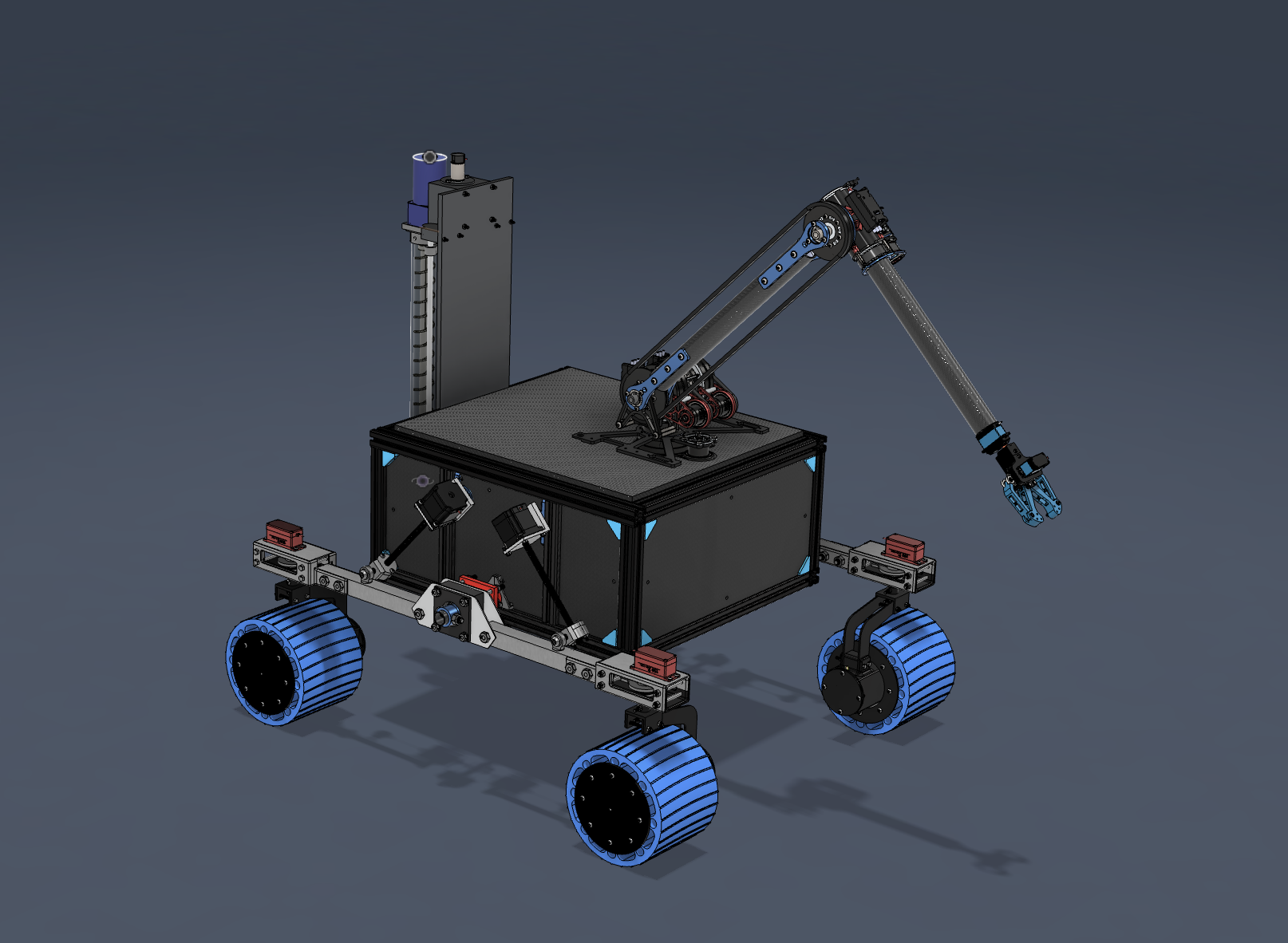
For years Lunomyss was the project that was always one subsystem away from finished. The active suspension worked, but the arm needed another revision. The arm worked, but the comms wanted rewriting. The comms held, but the onboard AI needed more data. On May 31, 2026, that loop finally closed. Lunomyss is complete, and for the first time it is a single machine instead of a pile of promising subsystems.
What Finished Means
Complete does not mean perfect. It means the rover does what we set out to build: it carries a 50 kg frame on active suspension, swings a modular arm with real reach, talks over custom comms that survive a bad link, and runs onboard AI that makes decisions without waiting on a human. Every one of those systems is ours, designed from zero, and now they finally agree with each other.
“The hardest part of a rover is not any single system. It is getting all of them to cooperate on the same bad day.”
From Competition Entry to Platform
Lunomyss started as a competition rover, and the deadlines of the European Rover Challenge shaped its first life. Finishing it changes what it is. It is now a platform: a rolling test bench for the power electronics, control systems, and autonomy work we do for everyone else. The lessons baked into it go straight back into the custom hardware we build for clients.
What Comes Next
A finished rover is not a parked rover. Lunomyss now becomes the place we prove new ideas before they ship in someone else's hardware. New payloads, new sensors, and the next generation of our control stack will all earn their scars on it first. The build is done. The driving has only started.
“We did not build a rover to put it on a shelf. We built it to keep finding out what breaks.”